
How to Heat a Basement in the GTA: Ducts, In-Floor Heat and What the Code Requires (2026)
Why finished basements run cold in the GTA, how we extend forced air, where heated floors earn their cost, what they cost to run on 2026 hydro rates, and which heating work needs a Toronto permit or an ESA notification.
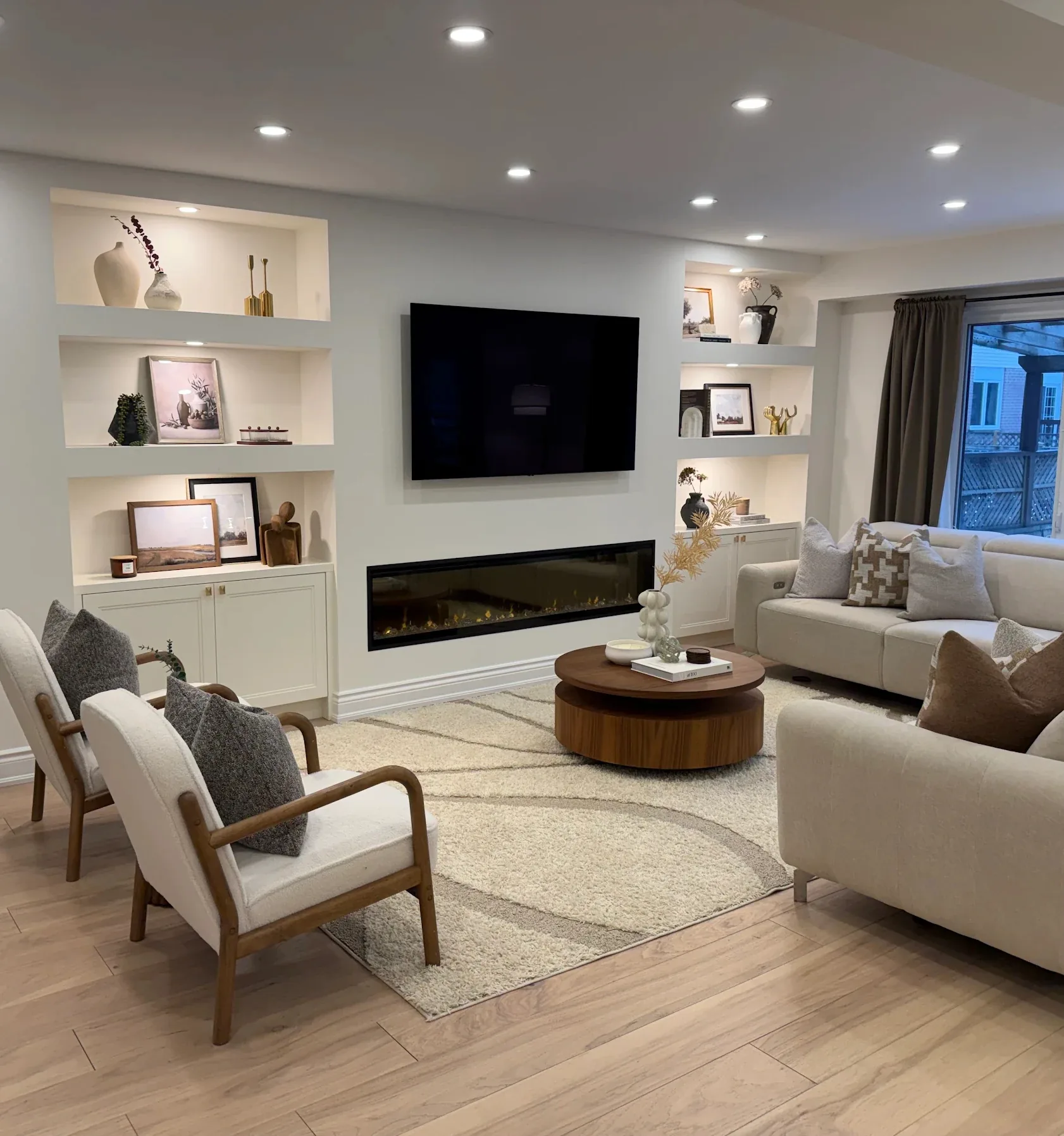
A finished basement in the GTA stays warm when it has three things: insulated walls and floor, enough supply air from the furnace, and a cold air return low in the room so the warm air has a reason to come down. Most cold basements we are called into have one or two of the three and a space heater covering the gap. The Ontario Building Code expects more. Part 6 requires a home's heating system to hold 22°C indoors at the winter design temperature, and here that temperature is brutal: the Town of Caledon publishes -21°C as its January figure, and the rest of the region is close to it. A basement sitting at 16°C in January is not a quirk of basements. It is a heating system that was never extended when the space was finished.
Here is how we handle it on the 400-plus basements we have built since 2017, what each option costs, and which parts need a permit before anyone touches a duct or a wire.
Why basements run cold
The concrete comes first. A foundation wall sits against cold soil all winter, and a bare slab pulls heat out of your feet all day. Natural Resources Canada puts a basement's share of a home's heat loss at about a quarter, which is why we treat insulation and a subfloor as part of the heating system. If the walls are still bare, read our guide to basement wall insulation before you price a single duct.
Airflow comes second. Warm air rises, so a ceiling register blows heat that collects at the joists and never reaches the sofa. Without a return low on the wall, cold air pools at floor level. The thermostat is third. It lives upstairs, it is satisfied when the main floor hits 21°C, and it shuts the furnace off while the basement is still six degrees behind.
Option one: extend the forced-air system properly
For most GTA houses this is the right answer, because the furnace is already there and sized for the whole house. The work is a supply run to every new room, at least one return low on an interior wall, and balanced dampers so the basement stops starving while the second floor overheats. On our itemized quotes the HVAC line starts around $3,400 for a typical basement: heat runs and cold air returns sized for each room, the bathroom exhaust vented outside, and the duct adjustments that come with new framing. It is one of the cheaper lines on the sheet and the one low quotes skip most often. When a competing quote has no HVAC line, ask why. Our basement cost report shows where that line sits against everything else.
Ducts also decide your ceiling. Builders dropped trunk lines wherever was convenient, and a finished basement inherits every bulkhead. We have re-routed trunk ducts in Richmond Hill to win back a flat ceiling, and that cost belongs in the quote, not in a surprise after demolition. The height rules are in our post on basement ceiling height in Ontario.
Inspectors care about ductwork too. On our first Mississauga second unit, on Delfi Road in 2018, the inspector wanted a duct smoke detector wired to the furnace before he would sign off. We still have the test certificate. Shared ductwork is part of why a legal suite costs more than a family room.
Option two: heated floors where your feet actually are
Electric in-floor heating is the upgrade clients thank us for most, and it almost always goes in the bathroom, sometimes the laundry room. It fixes the real complaint, which is cold tile, not cold air. Manufacturers' published Ontario pricing for the heating mat has sat around $10 to $12 a square foot, before the thermostat, the electrician and the tile on top. For a 60 square foot bathroom that is a modest line. Heating a whole 1,000 square foot basement this way is a different animal, for the panel as much as the budget.
Running cost is smaller than people expect. Most mats draw about 12 watts per square foot, so a 60 square foot bathroom floor is a 720-watt load. On Toronto Hydro's winter time-of-use prices in effect since November 1, 2026, that is roughly 6.5 cents an hour off-peak at 9.1 cents per kilowatt hour and about 13.6 cents an hour on-peak at 18.9 cents. Put it on a programmable thermostat for the morning shower and it costs less than the coffee.
Option three: electric supplements, and where they stop making sense
Electric baseboards and wall fan heaters are cheap to install and expensive to run, because every watt is bought at the electricity rate with no furnace efficiency behind it. We use them as a top-up in one room the ducts cannot reach well, never as the plan for a whole basement.
The linear electric fireplace on so many of our media walls is a heater too. A typical plug-in unit is a 1,500-watt element, enough to take the edge off a room on a cold evening. It will not carry the space, and anyone who sells it as the heating plan is selling the look.
A ductless heat pump is the modern option for a basement with no good duct path. It heats and cools, and the wall head is small. Whether a rebate exists for it this year changes often, so check our current list of basement rebates and tax credits rather than an old forum post.
Permits and the ESA in Toronto
The City of Toronto requires a permit to install or modify a heating system, and finishing a basement needs a permit when the work includes that kind of change. The City does not require one to replace a furnace or boiler, or to install a gas fireplace, air cleaner or in-line humidifier. If the heating work stands alone, Toronto issues a mechanical permit, and the 2026 fee for ductwork alterations in a house is $214.79 flat. Inside a full basement finish it rides in the main building permit, with HVAC drawings and heat loss calculations attached. The rest is in our GTA basement permits guide.
Electrical heat is a separate track. The Electrical Safety Authority states that almost all electrical work requires a notification of work filed before the work starts, and that a Licensed Electrical Contractor files it when you hire one. In-floor mats, baseboards and a dedicated fireplace circuit all count. Our electrical line, starting around $10,600, includes that notification and inspection, which is why we can hand clients the paperwork at the end. A gas fireplace needs a licensed gas fitter, so it is never a handyman job either.
What we do on every basement
Insulate the walls, lay an insulated subfloor, run supply and return air to every room, and put in-floor heat under any tile bare feet will touch. Then we balance the system once the drywall is up. Condensation on a cold wall in February is a related problem with its own fix, covered in our post on winter basement humidity.
FAQ
Why is my finished basement so cold?
Usually one of three things is missing: insulation on the walls and floor, enough supply air from the furnace, or a cold air return low in the room. An upstairs thermostat that shuts the furnace off before the basement catches up makes all three worse.
Do I need a permit to add heating ducts to my basement in Toronto?
Yes. The City of Toronto requires a permit to install or modify a heating system. On its own it is a stand-alone mechanical permit with a 2026 fee of $214.79 for ductwork alterations in a house; as part of a full basement finish it is included in the building permit. Replacing a furnace does not need a permit.
How much does heated flooring cost to run in Ontario?
A typical electric mat draws about 12 watts per square foot. A 60 square foot bathroom floor is a 720-watt load, roughly 6.5 cents an hour at Toronto Hydro's winter off-peak rate of 9.1 cents per kilowatt hour and about 13.6 cents an hour on-peak at 18.9 cents. On a timer for the morning, that is a few dollars a month.
Can I heat a basement with just electric baseboards?
You can, but it is the most expensive way, because every watt is paid at the electricity rate with no furnace behind it. Baseboards suit one room the ducts cannot reach, not a whole basement.
If your basement is finished and still cold, or you want the heating right the first time, book a free in-home consultation and we will check the walls, the ducts and the returns before we talk about finishes. Financing is available, and you can see how we work in Richmond Hill and across the GTA. A basement you avoid from November to March is not finished, whatever the flooring says.

Ready to price your basement?
Kam walks the space, draws it in 3D and sends an itemized estimate within 24 to 48 hours. No allowance lines, no surprises.
Get a Free Estimate