

OntarioBasement apartment insurance
Do I have to tell my insurer about a basement tenant?
Yes, before the tenant moves in and before the renovation starts. The Insurance Bureau of Canada's guidance is that renting out your basement changes the risk profile of your home, that a standard home policy covers only you, your spouse and your dependants, and that "failing to provide full disclosure relating to occupancy may void your home insurance policy." A permitted, inspected suite with the paperwork to prove it is what an insurer wants to see. An unregistered one in a city that registers suites is what a claims adjuster looks for.
Four questionsAnswer honestly, nobody is watching
- Does your insurance representative know there is, or will be, a separate unit in the basement?
- Was the suite built on a building permit, with the final inspection passed?
- Who lives there?
- Does the lease require the tenant to carry their own insurance?
Answer the four questions and the reading appears here. It is a prompt for the conversation with your broker, not insurance advice.
What the Insurance Bureau of Canada says
IBC represents Canada's home, auto and business insurers. Two of its consumer articles cover exactly this situation. The statements below are theirs.
Tell your insurance representative before your living arrangement changes, and keep a written record of that notification.
IBC, "Renting out a room? What you need to know about insurance," May 2025
Your home insurance policy only covers property, contents and personal liability for you, your spouse, and your dependants. It does not include your tenant's contents or personal liability.
IBC, May 2025
If, for example, a tenant accidentally starts a fire in your basement, and your insurance provider was unaware that you had a tenant, your policy could be voided.
IBC, May 2025
Your home insurance will exclude the renter's personal property but will insure the unit itself.
IBC, "Making room for Mom? Here's how an in-law suite could affect your home insurance," December 2024
Sources: ibc.ca, renting out a room; ibc.ca, in-law suites. IBC also notes that landlord coverage can replace lost rent after an insured loss and cover defence costs if a tenant or guest is injured, and that a suite may raise the home's value and the premium with it.
The municipalities say it louder
Town halls that register suites spell out the insurance consequence in their own words, because they see the fires. The Town of Whitby's page on the risks of an illegal or unsafe additional dwelling unit lists "loss of insurance coverage" second: "Having a rental unit in your home is a material change to your home. If you don't disclose this to your insurance provider, it may cause your insurance coverage to be null and void." It goes on to "limited recovery of damage," the point that a policy pays to put the house back as it was when the policy began, not to bring an illegal unit up to Code, and to financing: "Income from an illegal ADU may not be considered when applying for a mortgage loan."
The City of Pickering puts the upside the same way. Its registration certificate "officially recognizes the property as being approved for a legal additional dwelling unit," and "possession of the registration certificate may assist in future real estate transactions and insurance coverage." Registration depends on the municipality: Mississauga, Brampton, Barrie, Markham, Oshawa, Whitby and Pickering register; Toronto, Vaughan and Richmond Hill do not, and there the closed building permit is the record.
Sources: Town of Whitby, Additional Dwelling Units, "Risks to a landlord for an illegal or unsafe ADU" (whitby.ca); City of Pickering, Additional Dwelling Unit Registration (pickering.ca).
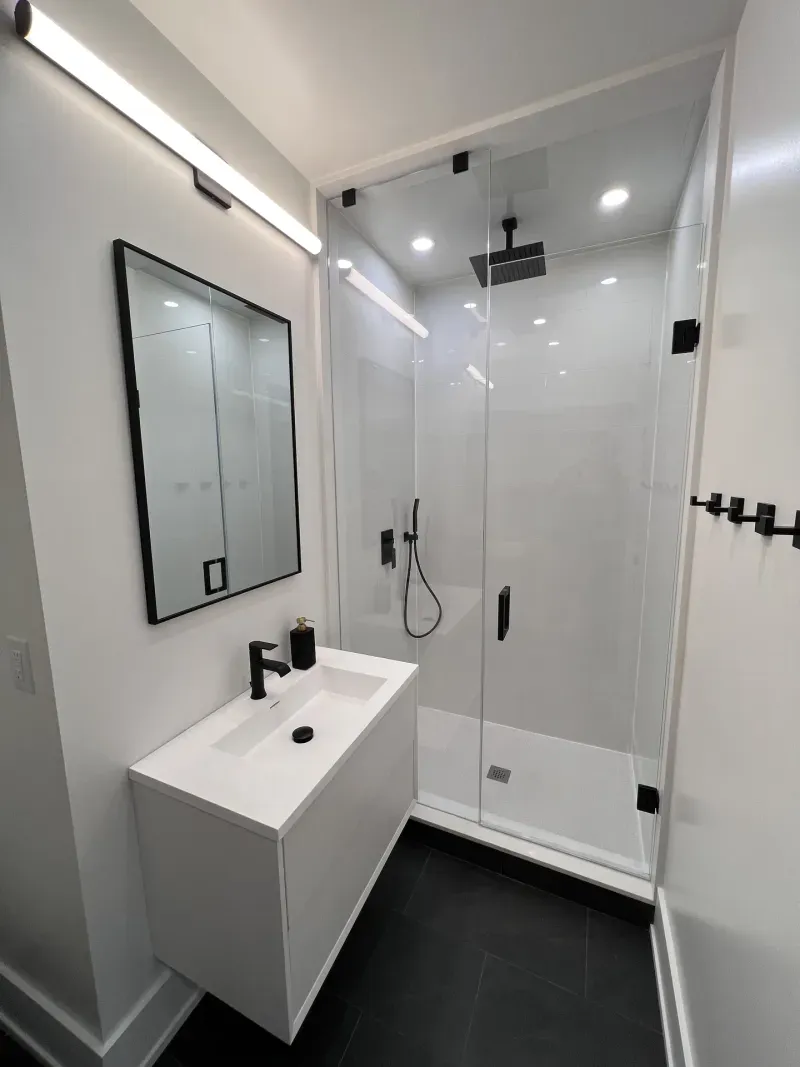
What a broker asks for, and what the build leaves behind
We are builders, not brokers. What we can do is make sure the file an underwriter wants exists on the day you call. A Desire legal suite closes with these in your hands.
- The closed building permitFiled by us with the municipality, every inspection booked and passed, so the suite is a dwelling unit on the City's record, not a finished basement with a stove in it.
- The registration certificateWhere the municipality issues one. Brampton's comes with occupancy, Oshawa's within 60 days of the final inspection, Whitby's after the ESA certificate and an exterior inspection.
- The ESA Certificate of AcceptanceThe Electrical Safety Authority's sign-off on the electrical work, which Whitby requires before registration and which an insurer may ask for after an electrical fire.
- Engineer-stamped permit drawingsPrepared and stamped by a licensed structural engineer, showing the 30-minute fire separation, the interconnected smoke alarms, the carbon monoxide alarms and the egress window.
- The itemized invoiceEvery line from the quote sheet, which is what a rebuild-cost conversation with your broker starts from, and what the CRA wants if you claim the multigenerational renovation credit.
The tenant's side
Your policy does not cover the tenant's furniture, laptop or liability. IBC's fifth tip for first-time landlords is to require tenant insurance in the lease and proof of it every year. The Region of Durham prices tenant insurance for a one or two bedroom apartment at $12 to $40 a month, and reminds renters that "your landlord's insurance does not usually cover your personal belongings." Put the clause in the lease before the keys change hands.
Source: Region of Durham, Tenant Insurance (durham.ca).
Insurance questions, answered as builders
Do I need to tell my insurance company about a basement apartment in Ontario?
Yes. The Insurance Bureau of Canada says to tell your insurance representative before the living arrangement changes and to keep a written record, because a standard home policy covers only you, your spouse and dependants, and non-disclosure of occupancy may void the policy.
Will insurance cover an illegal basement apartment?
The Town of Whitby's guidance is that an undisclosed rental unit is a material change that "may cause your insurance coverage to be null and void," and that a policy restores the house to its state when the policy began rather than paying to bring an illegal unit up to Code. Ask your broker, and fix the unit first; a permitted, inspected suite is what they want to insure.
Does an in-law suite change my home insurance?
Less than a rental does. IBC's guidance is that a policy normally covers direct family members living in the suite and their liability, but that you should inform your insurer before the work begins, and that the added value can raise the premium.
Does my tenant need their own insurance?
Your policy excludes the tenant's belongings and liability, so IBC recommends requiring tenant insurance in the lease with annual proof. The Region of Durham puts the cost for a one or two bedroom apartment at $12 to $40 a month.
What paperwork proves a basement apartment is legal?
The closed building permit with its final inspection, the municipal registration certificate where the city issues one (Mississauga, Brampton, Barrie, Markham, Oshawa, Whitby and Pickering register; Toronto, Vaughan and Richmond Hill do not), the ESA Certificate of Acceptance and the engineer-stamped drawings. Desire Basements hands all of them over at the end of every legal suite.
Related: legal basement apartments, Toronto, Brampton and Durham Region rules, the Ontario legal basement requirements post, and the cost calculator.
Build the suite your insurer wants to see.
Permit, inspections, registration where the city runs one, and a lifetime workmanship warranty. A free in-home visit and an itemized quote within 24 to 48 hours.