
Basement Electrical in Ontario: Panel Capacity, ESA Rules and What It Costs (2026)
Who is allowed to wire a basement in Ontario, what the 2026 Electrical Safety Code demands, when a 100 amp service has to become 200, and what the electrical line and ESA fees cost on a GTA quote.
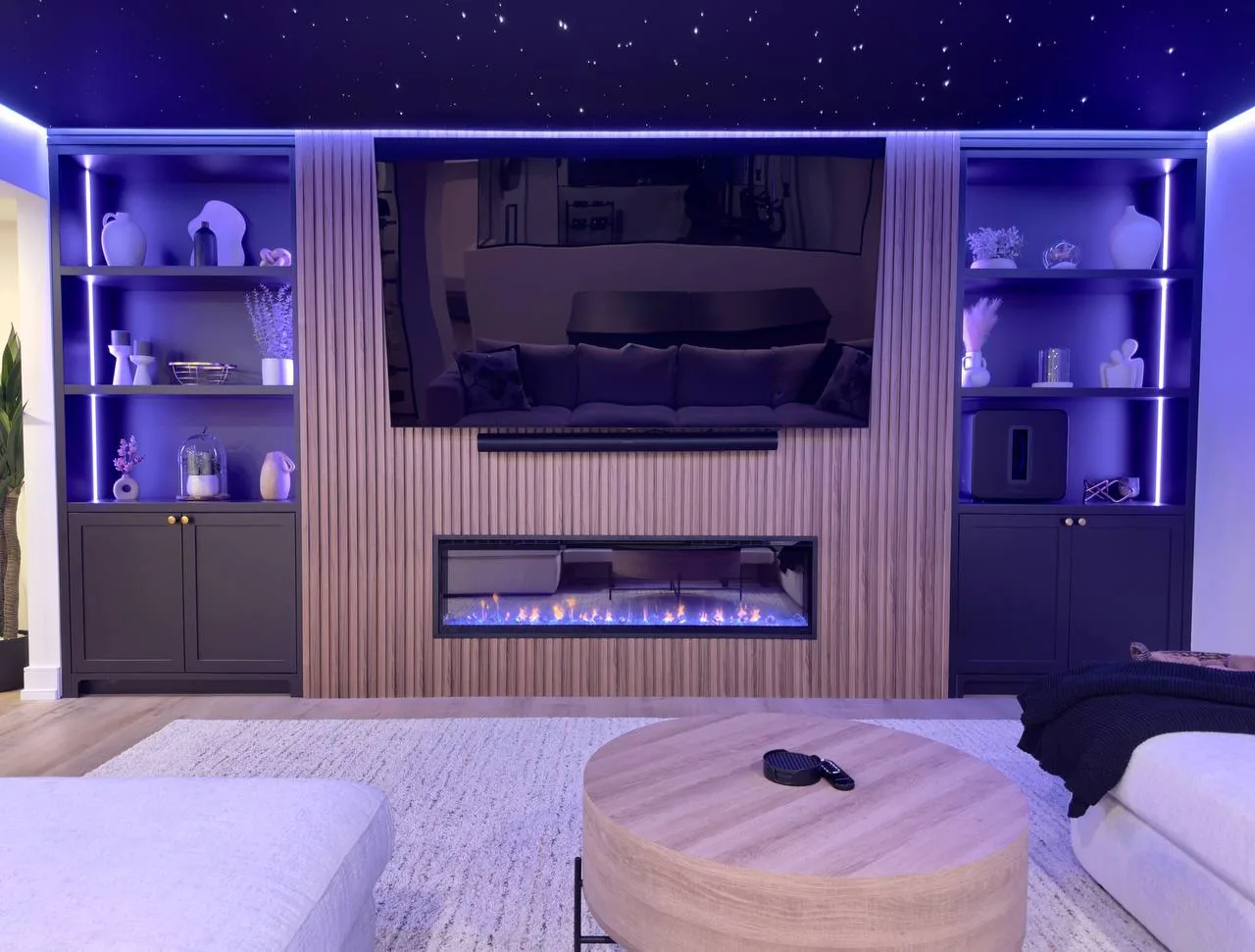
A finished basement in the GTA gets its own set of new circuits from the panel, nearly every one of them arc-fault protected, and a notification filed with the Electrical Safety Authority before the first cable is pulled. Whether it also needs a new 200 amp service depends on what is already hanging off your panel, not on the basement itself. A 100 amp house with a gas furnace, a gas stove and no car charger will usually take a basement in stride. The same house with central air, an electric range and a Level 2 charger is over its limit before we arrive, and the basement is simply the project that makes someone do the math.
Here is how it works on the 400-plus basements we have built since 2017: who may do it, what the Code demands, when the panel has to grow, and what it costs.
Who can do the wiring, and who has to know
Ontario has one simple rule. Anyone you hire to do electrical work must be a Licensed Electrical Contractor, and almost all electrical work needs a notification of work filed with the ESA before it starts. A general contractor's licence does not cover wiring. Our crew frames, insulates and finishes; the licensed electrical contractor we bring in does the wiring, files the notification under their own licence and books the inspections.
The inspections matter more than the paperwork. An ESA inspector checks the rough-in while the walls are open, and nothing gets covered until that visit is done. The final inspection ends with a Certificate of Acceptance. Keep it. A buyer's lawyer will ask for it, and an unpermitted basement is an awkward conversation at closing.
What the Code asks of a basement in 2026
The Ontario Electrical Safety Code treats a basement as living space, so the bedroom rules apply down here. Three of them drive most of the cost.
Arc-fault protection first. Since 2015, nearly every circuit that feeds a receptacle in an Ontario home needs an AFCI breaker. The exceptions are narrow: a bathroom receptacle on its own circuit, kitchen counter and island receptacles, a kitchen fridge on a dedicated circuit, and a dedicated sump pump. A bar fridge in the basement is not a kitchen fridge, so it gets arc-fault protection like everything else. And if your electrician extends an upstairs circuit to pick up a few basement receptacles, the extension needs AFCI protection from its first new outlet. This is why a basement is wired as fresh circuits from the panel rather than tapped off the old ones.
Ground-fault protection second. Any receptacle within 1.5 metres of a sink, bathtub or shower needs Class A GFCI protection, which covers the basement bathroom and the wet bar. Every new receptacle must also be tamper-resistant.
Alarms third. The Ontario Building Code wants a smoke alarm on every storey including the basement, one in every bedroom, and all of them interconnected so that one alarm sets off the rest. If the basement holds the furnace room, a carbon monoxide alarm goes near any sleeping area. Hard-wired, interconnected alarms are electrician work, and the inspector looks for them.
Lighting has one small rule. Pot lights in an insulated ceiling must be rated for insulation contact. We use IC-rated LED units, which also keeps the load tiny: a basement's 30 to 40 pot lights draw less than one hair dryer. Our lighting and colour guide covers the layouts we repeat most.
When 100 amps is not enough
Many GTA houses built before the 2000s came with a 100 amp service, and a basement on its own rarely breaks it. The Code's load calculation (Rule 8-200) starts with 5,000 watts for the first 90 square metres of living area and 1,000 watts for the rest, then adds the big appliances: central air at full value, an electric range at 6,000 watts, a Level 2 car charger at 7,680 watts, and a quarter of everything else such as the dryer and the water heater. ESA's own worked example, a 1,500 square foot house with air conditioning, an electric range, a dryer, an electric water heater and an EV charger, lands at 108.6 amps and a required 125 amp minimum service. That house is past 100 amps with an unfinished basement.
What a basement adds depends on what you put in it. A home theatre, a bar and an office are mostly receptacles and LED lighting, and they barely move the number. Three things do. Electric in-floor heating runs about 12 watts per square foot, so a heated 400 square foot family room is a 4,800 watt load. A sauna heater draws roughly what an electric range does. An electric fireplace is a 1,500 watt space heater in a nicer box. Put all three in a house that already has central air and a car charger and the panel is the first thing we price, not the last.
We would rather tell you to spend the money on the service upgrade than talk you out of the sauna. If you are planning a spa or gym basement or heated floors, the load calculation happens at the design stage, before the 3D renderings are final, because it changes the budget.
What a service upgrade involves and costs
Going from 100 to 200 amps means a new panel, new service conductors and often a new meter base and mast, with Toronto Hydro or Alectra disconnecting and reconnecting on the day. Published GTA electrician price guides for 2026 put the job between $2,000 and $4,500, a new meter base adding around $500 and older Toronto wiring adding more. The ESA fee for a service change is $86 for a contractor with a $92 minimum per notification, so the cost is labour and copper, not paperwork. Plan for a day without power.
If the panel is big enough but out of breaker slots, a sub-panel fed from the main panel is the cheaper fix. One caution for a legal second unit: ESA's bulletin on subdividing a house says you cannot simply hang a second panel beside the main one and call it the suite's panel. The suite's wiring is planned from the service, on the drawings, not after framing.
What the electrical line costs on a quote
On the sample itemized quote on our home page, electrical sits at $10,600 and up on a $72,000 illustrative build. That line covers the new circuits, AFCI and GFCI protection, pot lights, switches, receptacles, the bathroom fan, interconnected smoke and CO alarms, the ESA notification and both inspections. The ESA fee itself, under the schedule in force since April 1, 2026, is $201 for a renovation of 41 or more outlets without service work and $256 with it; a 1,000 square foot basement with pot lights crosses 41 outlets easily. A service upgrade, a heated floor or a sauna feed is priced as its own line so you can see it.
Two things push that line up that have nothing to do with the basement: aluminum branch wiring from the late 1960s and 1970s, which needs the right connectors wherever we tie in, and a panel brand the insurer dislikes, which often gets replaced while the service is open because the insurer will ask about it at renewal either way. Our 2026 cost report shows where electrical lands against the other trades on real GTA projects, and financing is available if the panel upgrade was not in the original number.
FAQ
Do I need a permit for basement electrical work in Ontario?
Yes. Almost all electrical work needs a notification of work filed with the Electrical Safety Authority before it starts, by the Licensed Electrical Contractor doing the job. It is separate from the municipal building permit for the basement itself; our basement permit guide covers that side.
Do I need a 200 amp panel to finish my basement?
Usually not for the basement alone. The deciding loads are central air, an electric range, an EV charger, electric heating and a sauna. A 1,500 square foot house with air conditioning, an electric range and a Level 2 charger already needs a 125 amp service in ESA's own worked example.
Can a general contractor do the electrical in my basement?
No. Hired electrical work in Ontario must be done by a Licensed Electrical Contractor, who files the ESA notification under their own licence. A homeowner may wire their own home and file themselves at the higher non-contractor rate, held to the same Code.
Do basement outlets need AFCI protection in Ontario?
Yes. Since 2015, nearly all receptacle circuits in a dwelling need arc-fault protection, including a basement bar fridge. The exceptions are a bathroom receptacle on its own circuit, kitchen counter receptacles, a kitchen fridge on a dedicated circuit and a dedicated sump pump. Receptacles within 1.5 metres of a sink, tub or shower need GFCI protection as well.
If you want the electrical designed with the basement instead of bolted on after, book a free in-home consultation. We will look at the panel before we talk about finishes, run the load calculation with your real appliances, and put every circuit, the ESA fee and any service upgrade on the itemized quote where you can see it. A basement that trips a breaker every time the sauna and the dryer run together is not finished, whatever the fireplace looks like.

Ready to price your basement?
Kam walks the space, draws it in 3D and sends an itemized estimate within 24 to 48 hours. No allowance lines, no surprises.
Get a Free Estimate